
Style
How to Put Patches on a Denim Jacket: A Placement Guide
June 25, 2026
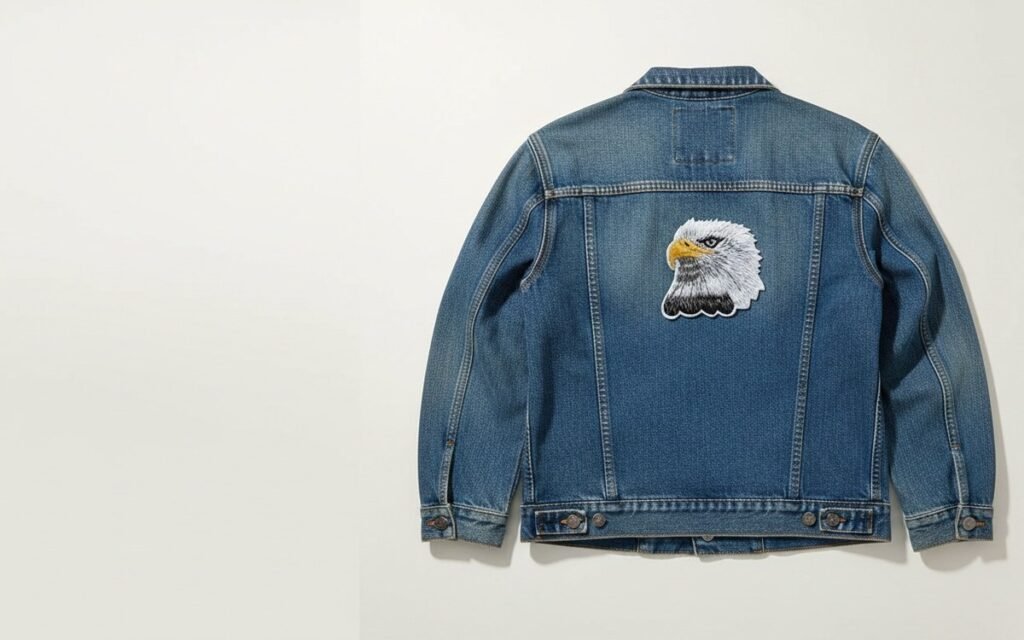
A denim jacket is the best canvas there is for patches. The fabric is heavy enough to hold weight without sagging, it takes a hot iron without complaint, and it already has structure — panels, seams, pockets — that gives you natural places to work with. Whether you want one quiet statement piece or a full festival-ready back panel, the difference between a jacket that looks intentional and one that looks cluttered comes down to placement.
Why denim is the ideal fabric
Iron-on adhesive needs real heat to bond properly, and denim handles it easily — no scorching, no shine, no melting. It’s also stiff enough that a large patch on the back won’t pull the garment out of shape, which is exactly the problem you hit on a t-shirt or a thin jacket lining.
Where to put them
The back panel. Prime real estate. This is where a single large patch does the most work — an animal, a flag, a bold graphic. Centre it between the shoulder seams and sit it high, roughly level with your shoulder blades. Placed too low it disappears whenever you sit down.
Chest pockets. The subtle option. A small patch above or on a chest pocket reads as a detail rather than a statement, and it’s the placement that works best if you wear the jacket to places a giant back piece wouldn’t suit.
Sleeves. Upper arm, lower arm, or a run of small patches down one side. Sleeves are where collections live — bands, countries, in-jokes — because you can keep adding without redesigning anything.
Shoulders. Underused and effective. A patch on each shoulder frames the back piece and pulls the whole composition together.
The collar. Unexpected, and the right home for something small with words on it. Bear in mind a collar folds, so keep patches here small enough to sit flat on one side of the fold.
The rule underneath all of these: pick areas that stay flat and don’t bend constantly. Elbows crease every time you move, so a patch there works loose faster than anywhere else on the jacket.
Plan before you press
Lay the jacket flat and arrange everything without any heat involved. Move pieces around, step back, and photograph the layout on your phone. The photo is the useful part — problems that are invisible up close jump straight out on a small screen.
Live with the arrangement for a day before committing. Iron-on is reversible, but only carefully and with some risk to the fabric, so it’s worth the wait.
Balance colour and scale
Start with one large focal patch and build outward. Mix sizes — a wall of identically sized patches reads as wallpaper — and repeat two or three colours across the jacket so the eye travels instead of stopping at the loudest thing.
Leave breathing room. Denim showing between patches is part of the design; crowding everything edge to edge is the single most common way a good collection ends up looking like a jumble.
Applying them
Work one patch at a time and let each cool fully before starting the next. Cotton setting, steam off, firm pressure for 30 seconds through a thin cloth, then again from the inside. Full instructions here: how to iron on a patch.
For a jacket you’ll actually wear hard, add a few stitches around the border of the larger pieces once they’ve cooled. Sleeves and the back panel take the most abrasion, and stitching stops a lifted corner ever catching on a bag strap.
Keeping it looking good
Denim jackets don’t need washing often, which helps. When you do, turn it inside out, wash cold on a gentle cycle and air-dry — the tumble dryer is what loosens patches. More on that in do iron-on patches come off in the wash?
Start your jacket with over 250 iron-on patches — or, if you’re marking off countries, the flag collection.
Back to the Journal