
Guides
How to Remove an Iron-On Patch Without Damaging the Fabric
July 29, 2026
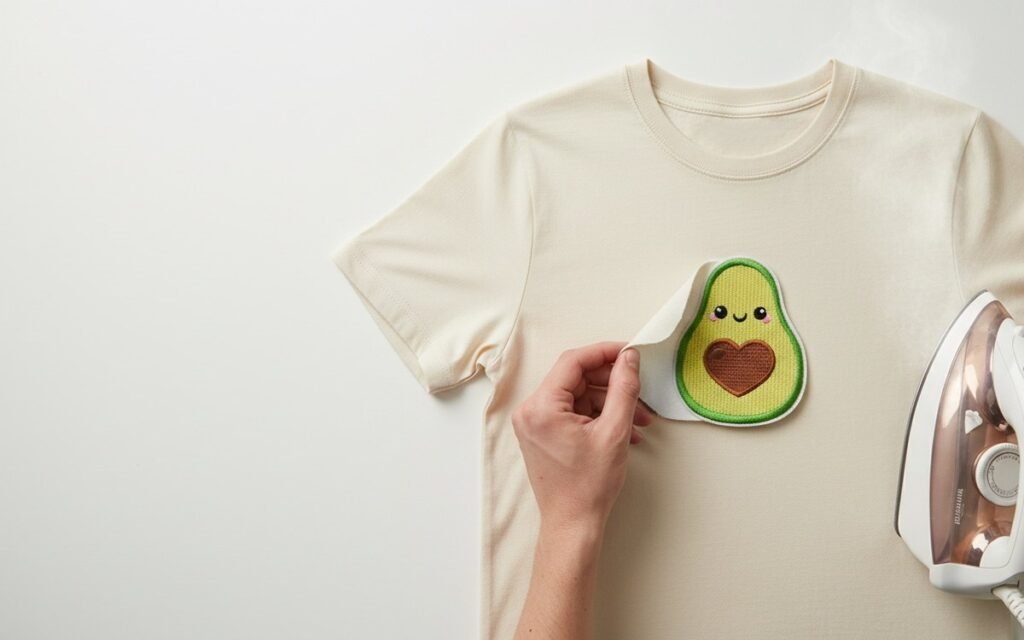
Put a patch on crooked? Inherited a jacket with someone else’s badge on it? Good news: the same adhesive that makes an iron-on patch permanent is also what lets you take it off again. Heat put it there, and heat gets it back.
Work through these in order. Start with the gentlest method and only escalate if you need to.
Before you start
Check the garment’s care label. If it cannot be ironed, skip to the solvent method further down — reheating a coated or synthetic fabric will do more damage than the patch ever did.
Be realistic about the outcome, too. On a garment that has been washed many times, the fabric under the patch has been protected from fading while everything around it has not. Removing the patch can reveal a slightly darker shadow. That is not damage, but it is worth knowing before you commit.
Method 1: an iron (start here)
- Lay the garment flat on a hard surface. Set a dry iron to medium — steam off.
- Cover the patch with a thin cotton cloth or parchment paper so you never touch the design directly.
- Press for 20 to 30 seconds. You are trying to warm the glue through, not scorch it.
- Lift a corner with tweezers while it is still hot. If it gives, keep pulling slowly and steadily.
- If it resists, press again and try the next corner. Never force a cold patch.
Work in short cycles: heat, lift a little, heat again. Patience here is what protects the fabric.
Method 2: a hair dryer
A hair dryer gives you less heat but far more control, which makes it the better choice on thinner or more delicate fabrics where an iron feels risky.
Hold it a few centimetres from the patch on its hottest setting for a minute or two, then work a corner up with tweezers. It is slower than an iron, but you are much less likely to mark the garment.
Method 3: adhesive remover
For a stubborn patch, or one on a fabric you cannot heat, use a fabric-safe adhesive remover.
Test it on a hidden area first — an inside seam or hem — and wait for it to dry to check for discolouration. If it passes, apply it to the edge of the patch, let it soak in for the time the product recommends, and peel slowly as the adhesive releases.
Work in a ventilated room and wash the garment afterwards to get the solvent out of the fibres.
Dealing with leftover glue
Almost every removal leaves a faint sticky outline. Do not panic and do not scrub.
Warm the residue again with the iron and press a clean cotton cloth onto it — the softened glue transfers onto the cloth. Repeat with a fresh section of cloth until little is left. For the last of it, dab with rubbing alcohol on a cotton pad, working from the outside in, then wash the garment normally.
What not to do
- Do not pull a cold patch. You will take fibres, and sometimes a hole, with it.
- Do not use a blade or scissors to get under the edge.
- Do not scrub residue while it is dry. You will fluff and fade the fabric around it.
- Do not put the garment in the dryer until the glue is fully gone — heat sets whatever is left.
If a shadow remains
Sometimes the outline simply will not go, especially on a well-worn dark garment. The simplest fix is the obvious one: put a new patch over it. A slightly larger design covers the old outline completely, and nobody will ever know.
Back to the Journal