
Guides
Can You Iron Patches on Nylon, Polyester or a Backpack?
July 22, 2026
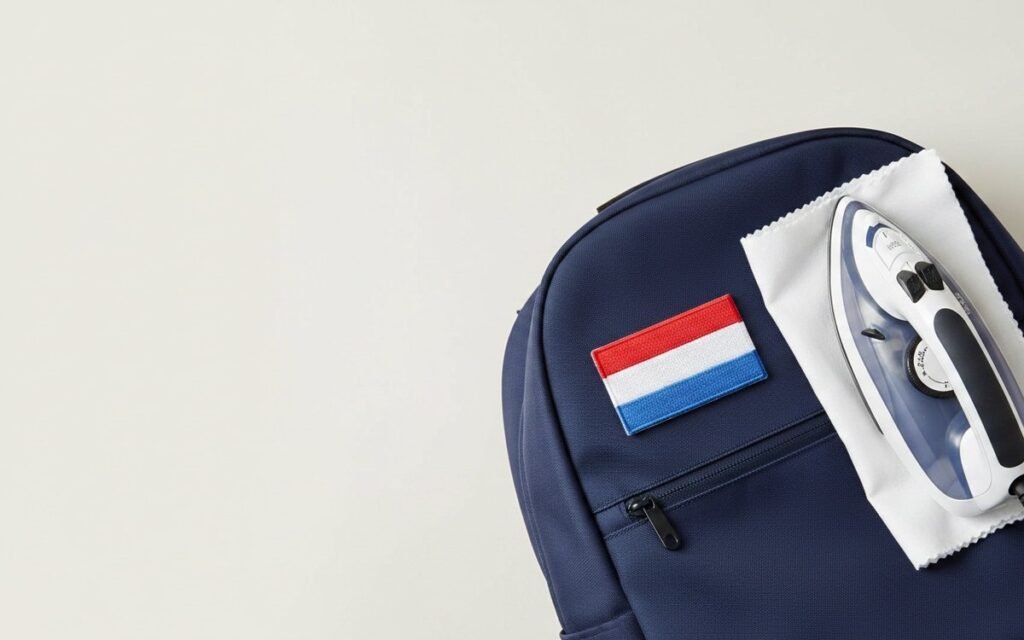
Iron-on adhesive needs two things: a surface it can sink into, and enough heat to melt without wrecking the material underneath. Most everyday fabrics give it both. A few do not — and they are exactly the ones people ask about most.
The quick answer
- Cotton, denim, canvas — yes, ideal.
- Polyester — yes, but turn the heat down and always use a pressing cloth.
- Nylon — no. It melts at roughly the temperature the glue needs.
- Most backpacks — no, because most backpacks are nylon.
- Waterproof or coated fabric — no. The coating blocks the bond and heat ruins the finish.
- Leather, suede, silk — no.
Polyester: yes, with a lighter touch
Polyester bonds perfectly well. The catch is that it scorches and shines at a lower temperature than cotton, so the cotton setting that works on denim can leave a permanent glossy mark.
Drop the iron one setting below cotton — the synthetic or wool mark on most dials. Always press through a thin cotton cloth or parchment paper, never directly onto the fabric. Work in slightly longer presses at the lower heat rather than cranking the temperature back up.
Test an inconspicuous spot first: a seam allowance, an inside hem, the tail of a shirt. Thirty seconds there tells you everything before you commit.
Nylon: don’t
This is the one that catches people out. Nylon starts to soften and deform around the same temperature the adhesive needs to flow, so there is no safe window: either the glue never properly melts, or the fabric does. Usually you get a shiny, puckered, permanently marked patch of jacket and an patch that lifts a week later anyway.
Windbreakers, packable rain jackets, sports shells, and the overwhelming majority of backpacks are nylon. If the fabric is thin, slightly slippery and rustles when you scrunch it, assume nylon and do not put an iron near it.
So how do you put a patch on a backpack?
Use velcro. This is not a workaround — for a backpack it is genuinely the better option.
You attach the loop side once, and after that the patch comes on and off in seconds. That suits a backpack far better than a permanent bond: you can change the design, take patches off before checking a bag into the hold, or move a favourite onto a new bag when the old one wears out. Plenty of travel bags already have a velcro panel built in.
Our backpack flag patches are made for exactly this, and stitching is always the fallback if you would rather have something permanent.
Waterproof and coated fabrics
Rain jackets and technical shells have a coating or membrane on one or both faces. The adhesive cannot reach the fibres through it, so the bond is weak from the start — and worse, the heat can delaminate the membrane and destroy the waterproofing permanently. That damage is not repairable.
Sew it, or pick a different garment.
Leather, suede and delicates
Heat marks leather and suede instantly, and the marks do not come out. Silk and other fine fabrics simply cannot take the temperature. All of these want a needle and thread.
Stretchy knits
Jersey, ribbing and anything with elastane will bond initially, but the fabric stretches and the patch does not. Every wear works the edges loose. If you want a patch on a stretchy garment, stitch it with a slight ease so the fabric can still move.
The rule that covers everything
Check the care label. If the garment can be ironed, you can almost certainly iron a patch onto it. If it shows a crossed-out iron, believe it — and reach for velcro or a needle instead.
Back to the Journal