
Guides
How to Fix a Hole in Your Jeans (Without Sewing)
August 8, 2026
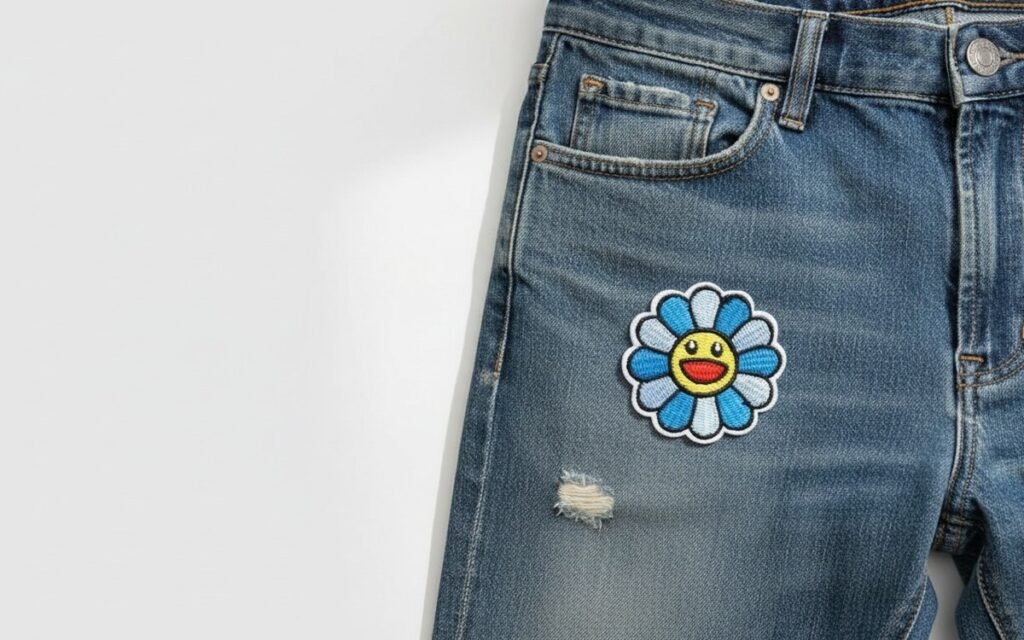
A hole in your favourite jeans does not mean they are finished. With an iron-on patch you can cover one in about ten minutes, no sewing machine required — and if you pick the patch well, the repair ends up looking deliberate rather than apologetic.
Here is how to do it properly, including the bits most guides skip.
Can an iron-on patch really fix a hole?
Yes, with one important caveat: the glue on the back of a patch needs fabric to bond to. Press a patch straight over an open hole and the middle of it has nothing to hold on to, so it lifts at the first wash.
The fix is simple. Put a piece of backing fabric behind the hole first, then apply the patch on top. Now the adhesive has something to grip across the whole surface.
What you need
- An iron-on patch at least 1 cm larger than the hole on every side
- A scrap of denim or cotton, slightly larger than the hole, for backing
- An iron (no steam) and a thin cotton cloth or tea towel
- Scissors
Step by step
- Trim the damage. Snip away loose threads and any frayed edges around the hole. Leave the fabric flat — anything bunched will show through.
- Turn the jeans inside out and place the backing fabric over the hole, right side facing out through the gap. Iron-on interfacing works well here if you have it.
- Turn the jeans back and position your patch so it covers the hole and overlaps solid denim by at least a centimetre all round.
- Cover with the cloth and press with a hot, dry iron for 30–40 seconds. Firm, steady pressure — leaning on it matters more than time.
- Let it cool completely before touching it. The bond forms as it cools, not while it is hot.
- Check the edges. If a corner lifts, press that spot again for another 15 seconds.
Our full step-by-step guide to ironing on a patch goes into more detail on temperature and timing.
Knees, seats and other spots that move
This is where we will be straight with you: on a knee, an iron-on bond alone will not last forever. Knees bend thousands of times a week and the adhesive gradually works loose at the edges.
If the hole is on a knee or the seat, iron the patch on as above and then run a simple running stitch around the edge. Five minutes with a needle turns a temporary fix into a permanent one. On a thigh, back pocket or lower leg, ironing alone is usually fine.
Choosing the right patch
Size first: measure the hole and add at least a centimetre on every side. A patch that only just covers the damage will peel from the edges inward.
After that it is a style decision. A repair patch does not have to look like a repair — most people cover a knee hole with something they actually like and let it read as decoration. Browse all our patches, or start with animals if you want something with a bit of character.
Will it survive the wash?
Applied properly, yes. Wash inside out at 30 °C and skip the tumble dryer — the heat and tumbling are harder on the bond than the water is. We covered this in detail in do iron-on patches come off in the wash?
And if you ever want it gone, patches can be removed again without wrecking the denim — see how to remove an iron-on patch.
One last thing
If you are repairing workwear or kit for a team, club or business, we also make custom patches from your own design — useful when you want the same logo across a lot of garments.
Back to the Journal